
Consultation follow-up
Interest after a first inquiry or consultation gets a prepared follow-up, and you approve it before it goes out.
A first conversation often ends with “let me think about it”. This workflow keeps that open thread in view: after a first inquiry or consultation, it prepares a short follow-up at the time you choose, with what was offered and the next step, for your team to approve.

Where this work slips today

After a first inquiry or consultation, the next move is often left to the client. The quote or proposal goes out, the conversation ends politely, and the follow-up waits for a quiet moment that does not come. A week later nobody is sure whether the client was contacted again, and a second message, if it is sent, is written from memory.
How this runs
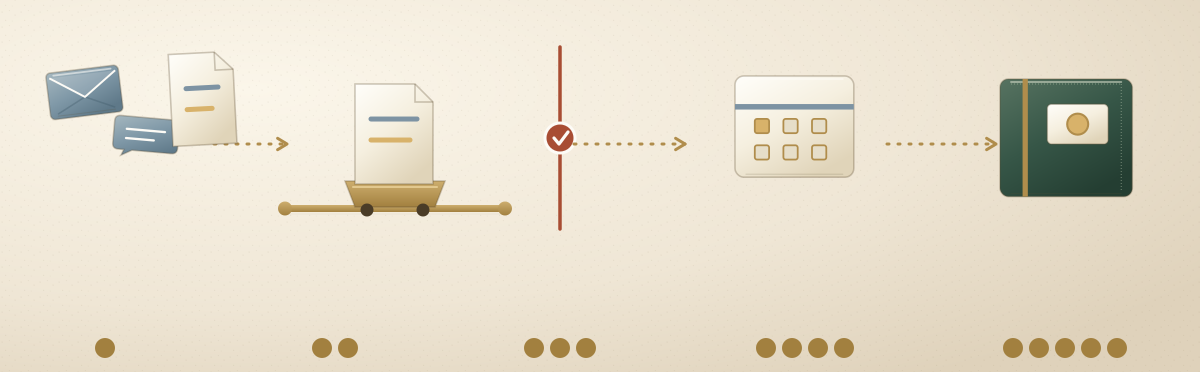
On Ateles, a first inquiry or consultation becomes a task that moves through a workflow we define with you before anything runs. Each step has a named owner, an agent or a person. A follow-up draws on the booking, the quote and the next step you offered, never on clinical notes. The steps below are the intended design, not a record of work already running.
The five steps
- A first conversation ends. A first inquiry or consultation becomes a task in the shared record, with the date, what was offered and the follow-up time you set.
- The agent prepares a follow-up. At the time you set, the agent drafts a short message that recalls what was offered and proposes the next step, in your approved wording. If the client has already replied or booked, nothing is prepared.
- The checkpoint. The follow-up waits. A named team member approves, edits or stops it before it goes out.
- The follow-up goes out. Once approved, it is sent, and the client has a clear next step: a time to book, a question answered, or a reminder that the offer stands.
- The record keeps it. The first conversation, each follow-up, each decision and any reply stay in the record, and the thread stops when you decide.
Who does what
The agents do the preparing and your team does the deciding. That line is drawn before anything runs, and nothing crosses it without an approval.
- The agents prepare. Keeping each open conversation in view, drafting the follow-up at the time you set from what was offered, and stopping when the client replies or books.
- Your team decides. What to offer, how many times to follow up and when to stop, and every decision to send. A question that needs a person, or anything clinical, goes to a named person without a draft.
Example: an agency
An agency has a first call with a business that wants help with its website. The agency sends a proposal, and a week later an agent drafts a short message that recalls the proposal and offers a second call, in wording the agency has approved.
The message waits at the checkpoint. The account lead changes one sentence and approves it, and then it goes out. The client replies with a question about the scope, which goes to the account lead, who answers it. Each step stays in the record.
What the record holds, in order:
- The first call and the proposal sent
- The follow-up the agent drafted
- The account lead's change and approval
- The client's question, answered by the account lead
See what you could delegate.
A free, no-commitment 30-minute conversation. You leave with a clearer picture, whether or not you work with us.