
Trial to member
Trial visitors get a prepared next conversation.
Someone who tries a club for a day or a week has shown interest, and the moment to talk about what comes next passes quickly. This workflow prepares a short, personal next message for each trial visitor, for the club to approve before it goes out.

Where this work slips today
A trial visit is easy to welcome and easy to lose track of. The front desk is busy, follow-up depends on whoever was on shift, and a visitor who enjoyed a class may hear nothing, or hear the same standard message as everyone else, days later.
How this runs
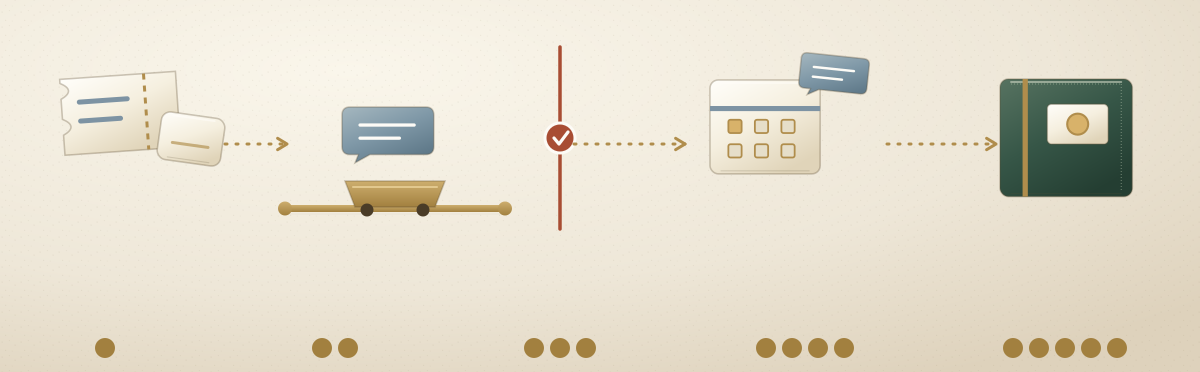
On Ateles, each trial visitor becomes a task that moves through a workflow we define with you before anything runs. Each step has a named owner, an agent or a person. The steps below are the intended design, not a record of work already running.
The five steps
- A trial visit is recorded. A trial pass or a first class in your own booking tool marks a visitor the club may contact. That becomes a task in the shared record, with the visit and anything the visitor asked about.
- The agent prepares a next message. A short note in the club’s tone that mentions the class the visitor tried and offers a time to talk about what comes next. It can do only what its permissions allow.
- The checkpoint. Anything sent outside the business waits for approval by default, so a named team member approves, edits or stops each message.
- The message goes out. Once approved, it is sent to the visitor. Membership options and prices are the club’s to state; the agent does not offer them.
- The record keeps it. The visit, the message, the decision and any reply stay in the record, so the next conversation starts from what already happened.
Who does what
The agents do the preparing and your team does the deciding. That line is drawn before anything runs, and nothing crosses it without an approval.
- The agents prepare. Noticing each trial visit, drafting a short next message in the tone you approved, and noting who has already been contacted.
- Your team decides. Whom to contact, what to offer and when. A visitor with a question the message cannot answer, or anything unusual, goes to a named person.
Example: a fitness club
A visitor uses a one-week trial pass at a fitness club and books two classes. On the last day, the trial becomes a task, and an agent drafts a short note that mentions the classes and offers a time to talk with the club’s staff.
The note waits at the checkpoint. The club’s manager approves it or edits a line, and then it goes out. If the visitor replies with a question about joining, the case goes to a named person at the club. Each step stays in the record.
What the record holds, in order:
- The trial pass and the classes booked
- The note the agent drafted
- The manager's decision
- The visitor's reply, and who took it
See what you could delegate.
A free, no-commitment 30-minute conversation. You leave with a clearer picture, whether or not you work with us.