
Unpaid-invoice follow-up
Every overdue invoice gets a prepared reminder, and you approve it before it goes out.
A reminder about an unpaid invoice is routine work that is easy to postpone and awkward to write. This workflow prepares each reminder in the tone you choose, reads the record first so a disputed invoice is not chased, and holds every reminder for your approval.

Where this work slips today

Invoices pass their due date quietly. Chasing them takes time that is hard to find, and the wording depends on the day and the customer. The risk runs both ways: a reminder that never goes out, and a reminder about an invoice the customer has already disputed.
How this runs
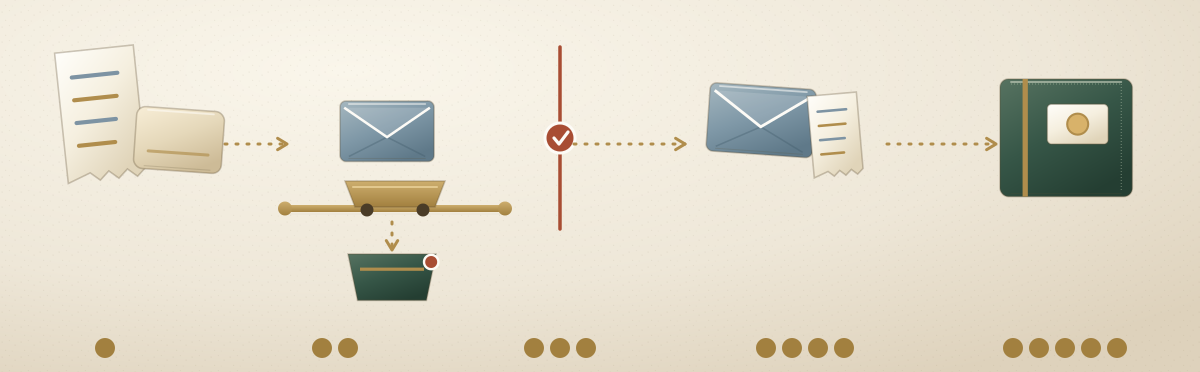
On Ateles, each overdue invoice is a task. It moves through a workflow we define with you before anything runs, and every step has a named owner, an agent or a person. The steps below are the intended design, not a record of work already running.
The five steps
- An invoice becomes overdue. An invoice passes its due date in your accounting or invoicing records and becomes a task in the shared record, with the invoice, its terms and the earlier messages about it.
- The agent reads the record, then prepares a reminder. The reminder is in the tone and on the schedule you set. A disputed invoice is not chased: it waits for a person.
- The checkpoint. A named person approves, edits or stops the reminder, and no reminder goes out beyond the approval you set. A disputed invoice reaches that person with what is needed to decide.
- The reminder goes out. Once approved, the reminder is sent, and the invoice stays on schedule for the next one.
- The record keeps it. The invoice, each reminder, each decision and any dispute stay in the record, so whoever picks the case up next sees the history.
Who does what
The agents do the preparing and your team does the deciding. That line is drawn before anything runs, and nothing crosses it without an approval.
- The agents prepare. Reading the record, preparing each reminder in your tone and on your schedule, and setting a disputed invoice aside for a person.
- Your team decides. The relationship with the customer: whether to chase, wait or let it go, and what to do when an invoice is disputed.
Example: an agency
A small agency has an invoice that has passed its due date. The invoice becomes a task. An agent reads the record, finds no dispute and drafts a friendly reminder in the agency’s usual tone.
The reminder waits at the checkpoint. The agency’s owner approves it and it goes out. Another invoice has a note in the record saying the client disputes the amount. The agent does not draft a reminder. It puts the case in front of the owner, who decides what happens next.
What the record holds, in order:
- The overdue invoice, its terms and the earlier messages
- The reminder the agent drafted
- The owner's approval
- The note that the other invoice is disputed, and what the owner decided
See what you could delegate.
A free, no-commitment 30-minute conversation. You leave with a clearer picture, whether or not you work with us.