
Meeting notes that become commitments
After a call or meeting, what was decided and who promised what is written up for you to read first.
A meeting ends with decisions and promises, and most of them live only in the notes of whoever was there. This workflow turns those notes into a short write-up of what was decided and who promised what by when, and holds it for you before anything reaches the client.

Where this work slips today

After a call, everyone leaves with a slightly different memory of what was agreed. The notes stay in one person’s notebook or in a document nobody opens again, the follow-up email waits until the end of the day or the week, and a promise made to the client is remembered only when the client asks about it.
How this runs
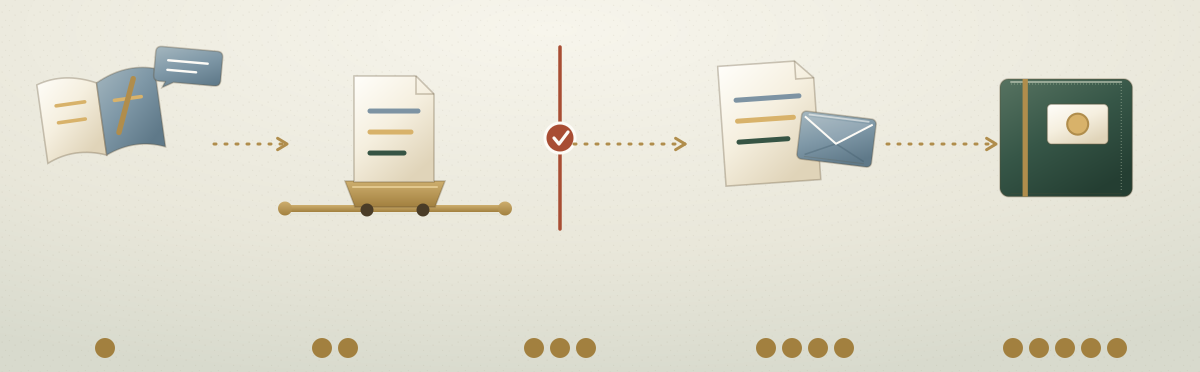
On Ateles, each meeting you choose to include becomes a task. It moves through a workflow we define with you before anything runs, and every step has a named owner, an agent or a person. The steps below are the intended design, not a record of work already running.
The five steps
- The notes come in. After a call or meeting, the notes your team takes are added to the shared record, with the date, who was there and the client it concerns.
- The agent writes it up. A short write-up: what was decided, who promised what, and by when. Anything the notes leave unclear is marked as a question, not filled with a guess.
- The checkpoint. You read the write-up first. You approve it, correct it or stop it, and nothing goes to the client until you say so.
- The follow-up goes out. Once approved, the write-up goes to the people you name, and each promise becomes a task with its owner and its date.
- The record keeps it. The notes, the write-up, your changes and each promise stay in the record, so the next meeting starts from what was agreed.
Who does what
The agents do the preparing and your team does the deciding. That line is drawn before anything runs, and nothing crosses it without an approval.
- The agents prepare. Writing up the decisions and promises from the notes, marking what is unclear, and keeping each promise in view until it is done.
- Your team decides. What was really agreed, what the client is told, and who owns each promise. A sensitive point stays with a named person and out of the write-up.
Example: an agency
An agency has a call with a client about a new campaign, and the account manager adds the notes to the record. An agent drafts the write-up: the brief is agreed, the agency sends a first draft next week, and the client sends the brand files before then. One point about the budget is marked as unclear.
The write-up waits at the checkpoint. The account manager corrects the budget point and approves it, and then it goes to the client. The two promises become tasks, one for the agency’s designer and one to check that the client’s files arrived.
What the record holds, in order:
- The notes from the call
- The write-up the agent drafted
- The account manager’s correction and approval
- The two promises, each with its owner
See what you could delegate.
A free, no-commitment 30-minute conversation. You leave with a clearer picture, whether or not you work with us.