
Post-treatment check-in
A timely check-in after a treatment, with anything clinical returned to your team.
A short message a few days after a treatment tells a patient that the clinic remembers them and is there if they need anything. This workflow prepares that check-in at the time you set, in wording your clinicians have approved, and sends every reply that touches on health straight back to your team. It gives no advice and makes no assessment.

Where this work slips today

Checking in after a treatment is something most clinics mean to do and few manage every time. It depends on someone remembering on the right day, between appointments. When a patient replies, the answer can sit in a shared inbox or on a phone until someone who can deal with it sees it.
How this runs
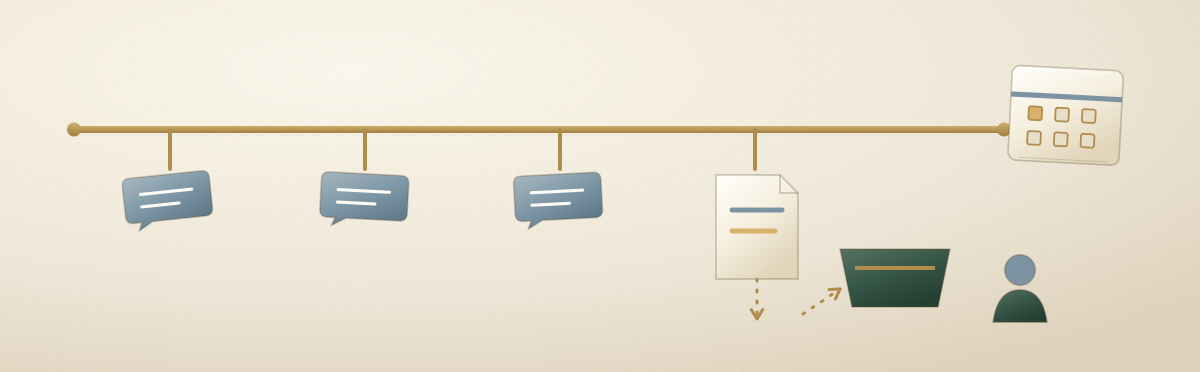
On Ateles, a completed treatment visit becomes a task that moves through a workflow we define with you before anything runs. Each step has a named owner, an agent or a person. The check-in draws only on scheduling data, such as the date of the visit, not on clinical notes, and the agent never answers a health question. The steps below are the intended design, not a record of work already running.
The five steps
- A treatment visit is completed. Your agenda shows a completed visit of a type you chose for a check-in. It becomes a task in the shared record, with the date of the visit and the check-in time you set, and nothing from the clinical notes.
- The agent prepares the check-in. A short, general message in the wording your clinicians approved, asking how the patient is and saying how to reach the clinic. It gives no advice.
- The checkpoint. The check-in waits. A named team member approves, edits or stops it before it goes out.
- The check-in goes out, and replies come back to your team. Once approved, it is sent. A reply that mentions how the patient feels, a concern or the treatment goes straight to the clinician or a named person, without a draft.
- The record keeps it. The visit, the check-in, the decision and who took up any reply stay in the record, so the team can see that every reply reached a person.
Who does what
The agents do the preparing and your team does the deciding. That line is drawn before anything runs, and nothing crosses it without an approval.
- The agents prepare. Preparing each check-in at the time you set, in your approved wording, and passing every reply to the right person. They never answer a health question.
- Your team decides. Which treatments get a check-in and when, the wording, and every decision to send. Every reply about health is for the clinician, and anything clinical stays with your team.
Example: an aesthetic clinic
An aesthetic clinic sets a check-in three days after a treatment visit. The visit is marked as completed in the agenda, and the check-in becomes a task. An agent drafts the general message the clinic’s practitioners approved, asking how the patient is and giving the clinic’s number.
The message waits at the checkpoint. The front desk approves it, and it goes out. The patient replies with a question about the treatment, and the reply goes straight to the practitioner, who calls the patient. Each step stays in the record.
What the record holds, in order:
- The completed visit, from the agenda
- The check-in the agent drafted
- The front desk's approval
- The patient's reply, passed to the practitioner
See what you could delegate.
A free, no-commitment 30-minute conversation. You leave with a clearer picture, whether or not you work with us.