
Treatment-plan follow-up
The next visit of an agreed plan gets a prepared message to book it, and clinical decisions stay with the clinician.
A treatment plan often runs over several visits, and each next visit has to be booked. This workflow keeps the scheduling side of the plan in view: when a visit is due and not yet booked, it prepares a short message offering a time, for your team to approve. What the plan contains, and whether it changes, stays with the clinician.

Where this work slips today
Once a plan is agreed, booking the next visit depends on the patient remembering to call or on someone at the front desk checking a list. Between visits the plan sits in the clinical system and the agenda shows only what is already booked, so a visit that was never booked does not show up anywhere.
How this runs
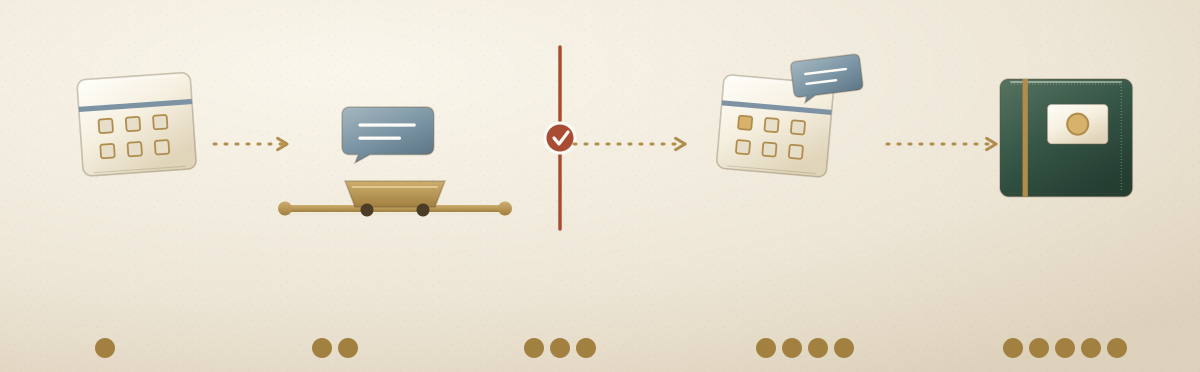
On Ateles, a plan visit that is due becomes a task that moves through a workflow we define with you before anything runs. Each step has a named owner, an agent or a person. The messages draw only on scheduling data, not on clinical notes. The steps below are the intended design, not a record of work already running.
The five steps
- A plan visit comes due. Your agenda and scheduling records show that the next visit of an agreed plan is due and not yet booked. It becomes a task in the shared record, with the visit that is due and nothing from the clinical notes.
- The agent prepares a message. A short message offering a time for the next visit, in your approved wording. It names the visit, not the treatment.
- The checkpoint. The message waits. A named team member approves, edits or stops it before it goes out. If the plan may have changed, the case goes to the clinician first.
- The message goes out. Once approved, it is sent, and the patient can book the next visit. Booking itself stays with your team.
- The record keeps it. The visit that was due, the message, the decision and any reply stay in the record, so the next visit of the plan starts from what already happened.
Who does what
The agents do the preparing and your team does the deciding. That line is drawn before anything runs, and nothing crosses it without an approval.
- The agents prepare. Noticing which plan visits are due and not booked, and drafting each message in your approved wording, from scheduling data only.
- Your team decides. The plan itself and every clinical decision, which stay with the clinician; who is contacted and when; and every decision to send. A reply about the treatment goes to the clinician, without a draft.
Example: a dental clinic
A patient at a dental clinic has agreed a plan of three visits, and the second visit is due but not booked. The clinic’s agenda shows the gap, and it becomes a task. An agent drafts a short message offering two times for the next visit, with no detail of the treatment.
The message waits at the checkpoint. The receptionist adds a third time and approves it, and then it goes out. When the patient replies with a question about the treatment, the reply goes to the dentist, who answers it. Each step stays in the record.
What the record holds, in order:
- The plan visit that was due, from the agenda
- The message the agent drafted
- The receptionist's change and approval
- The patient's question, passed to the dentist
See what you could delegate.
A free, no-commitment 30-minute conversation. You leave with a clearer picture, whether or not you work with us.